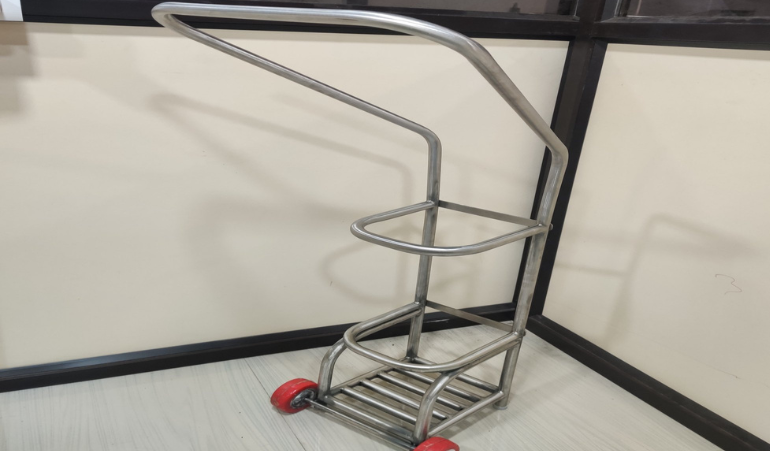
Material: The trolley is constructed primarily from stainless steel, which is chosen for its durability, corrosion resistance, and hygiene properties. Stainless steel ensures a robust structure that can withstand the challenges of various environments.
Design: The trolley is designed to securely hold and transport oxygen cylinders. It typically consists of a frame with a base to support the cylinder and a structure to hold it in place. The design allows for easy loading, unloading, and movement of the oxygen cylinder.
Mobility: To facilitate easy transportation, the trolley is equipped with wheels. The wheels are often swivel-type, providing maneuverability in different directions. Some models may also have brakes to secure the trolley in place when needed.
Safety Features: SS Oxygen Cylinder Trolleys are designed with safety in mind. They often include safety straps or restraints to secure the oxygen cylinder during transit, preventing accidental falls or damage. Additionally, the trolley may have features such as a locking mechanism to keep the cylinder in place.
Size and Capacity: Trolleys come in various sizes to accommodate different cylinder sizes. The capacity of the trolley is matched to the size and weight of the oxygen cylinder it is intended to carry.
Versatility: Depending on the model, the trolley may be designed to carry single or multiple cylinders simultaneously. This versatility allows for efficient management of oxygen supply in various settings.
Maintenance: Stainless steel is chosen not only for its durability but also for its ease of maintenance. The trolley can be easily cleaned and sanitized, ensuring a hygienic environment for medical applications.
Compliance: Quality SS Oxygen Cylinder Trolleys are designed to comply with relevant safety and quality standards, ensuring that they meet the necessary requirements for use in healthcare and industrial settings.
Usage: These trolleys are commonly used in hospitals, clinics, ambulances, and industrial facilities where a portable and reliable source of oxygen is required. They play a crucial role in the safe and efficient management of oxygen cylinders, ensuring that they are readily available when needed.